Roof Repairs
Repairs on Hills District roofs, where blocked valleys under established gums and corroded valley iron cause most leaks.
Learn more →Full re-roofing in tile or Colorbond for Hills District homes, two-storey brick, acreage sheds and new estates. Free inspection and written quote.
Plenty of roofs that get quoted for replacement do not need it. A 1970s concrete tile roof with crazed pointing and rusted valleys is usually a restoration and a repair, not a strip-off.
Replacement earns its keep when one of these is true:
We will tell you which of those applies, with photographs, and if none of them does we will tell you that too.
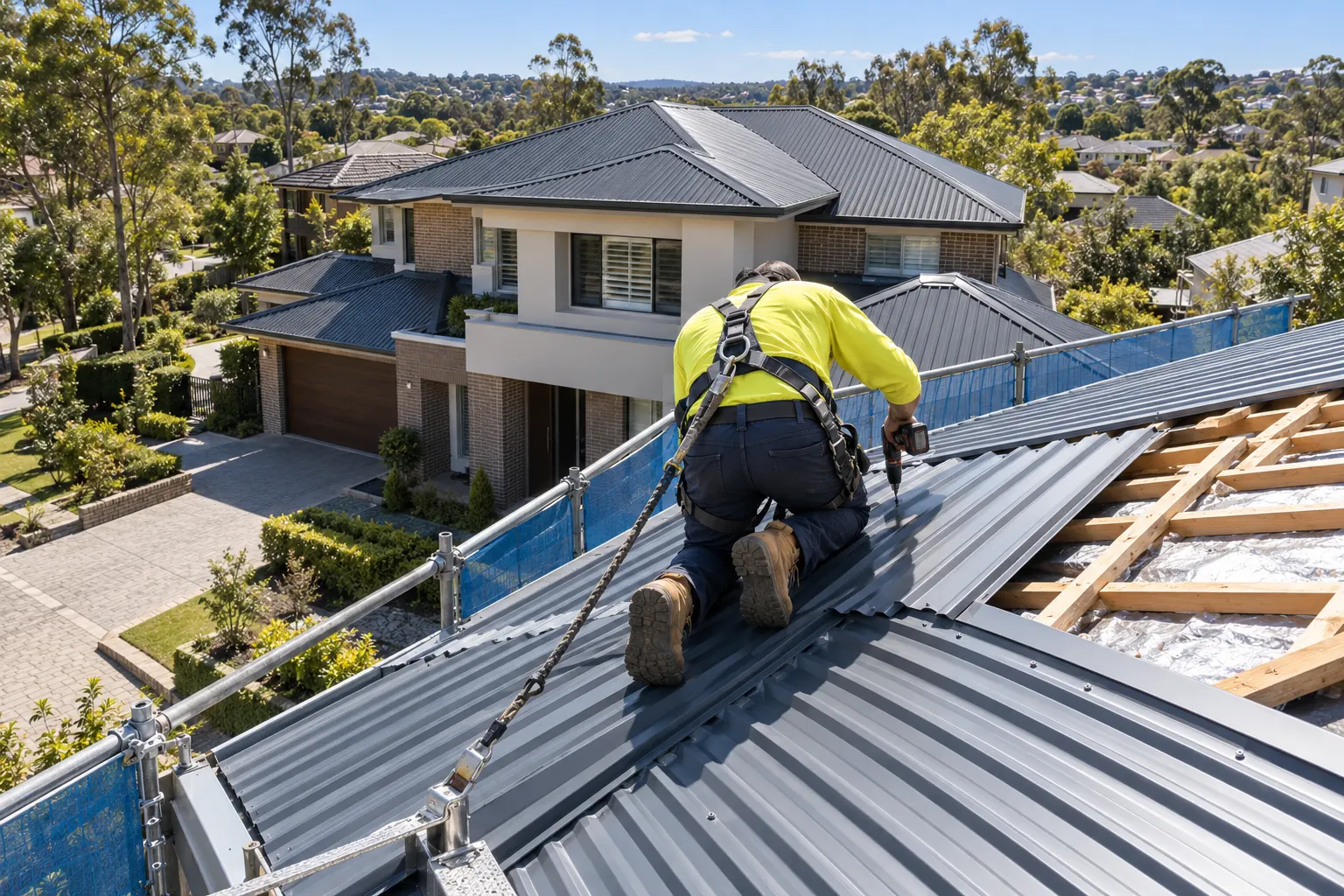
Large two-storey brick homes. Castle Hill, Baulkham Hills, Kellyville, Glenhaven and West Pennant Hills are full of houses with four, six or more roof planes, deep internal valleys, dormers and flashings against two-storey brickwork. The sheeting or tiling is the straightforward part. Getting the valleys, the hips and the wall junctions right is what decides whether the roof leaks in year three.
Acreage properties. At Dural, Middle Dural, Kenthurst, Annangrove, Galston and Maraylya the house is often the smaller part of the job. Machinery sheds, stables, carports and long verandah runs all come into the conversation. Long runs mean fewer end laps, which is good, but they demand accurate fall and proper expansion allowance.
The newer estates. Rouse Hill, Box Hill, North Kellyville and Beaumont Hills are mostly inside their first fifteen years, so full replacement there is rare. When it happens it is usually a defect rectification rather than age — a roof that was detailed badly on the way up.
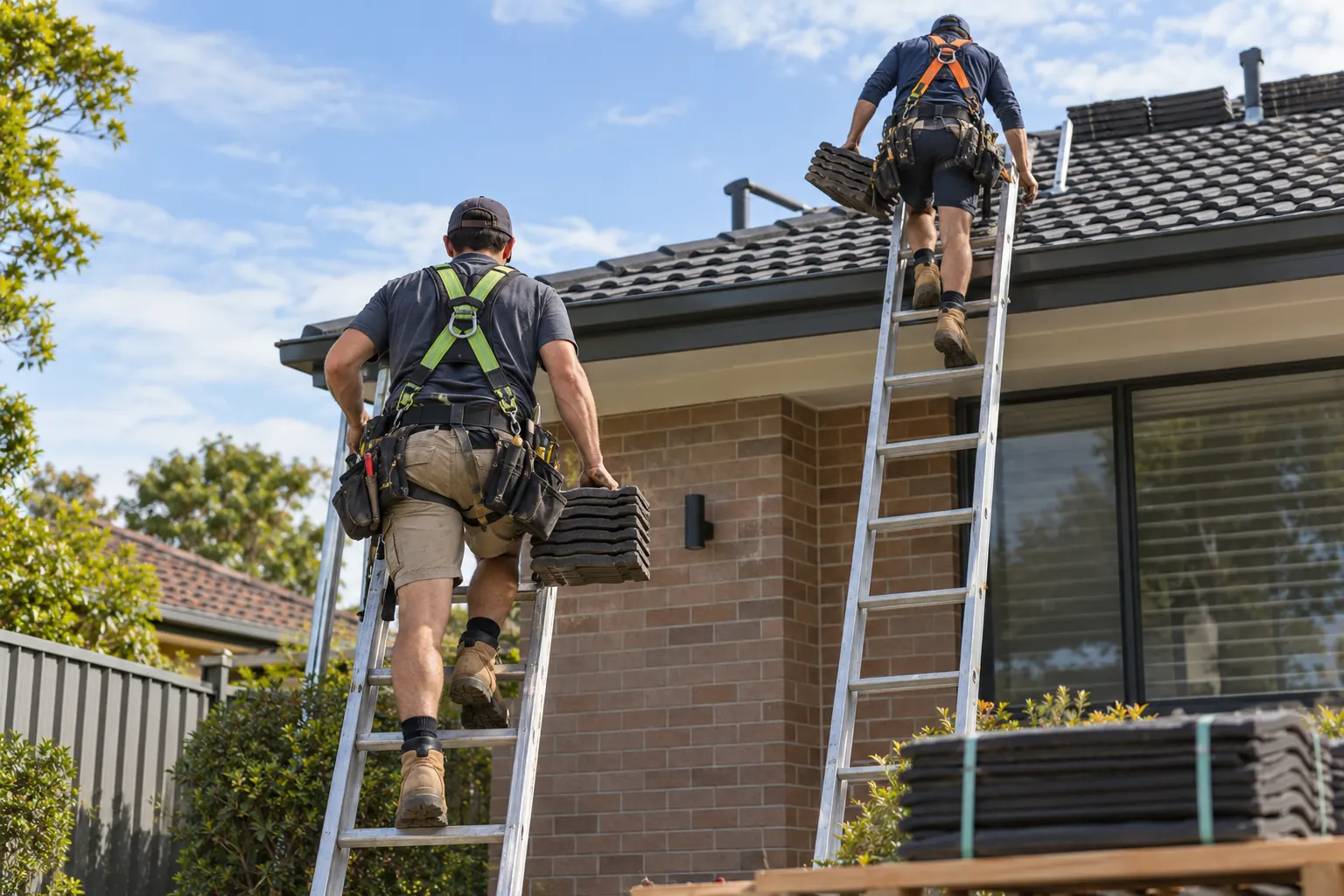
Both are correct answers. The local considerations that actually matter:
Tile suits the established streetscapes and matches neighbouring houses in suburbs built out in the brick-and-tile era. Concrete tile is durable, quiet in rain and heavy, which some older frames are already designed for. Its weakness here is that gum leaf and bark sit in the laps and valleys, so maintenance never really stops.
Colorbond and other steel sheet sheds debris far better, which matters enormously under established trees at Cherrybrook, Glenhaven or West Pennant Hills. It is dramatically lighter, it can run at lower pitches, and long sheets mean fewer joints to fail. On bushfire-prone blocks around Galston, Middle Dural and Maraylya, a sealed sheet roof with ember-proof detailing is easier to get right than a tile roof with thousands of small gaps. See the metal and Colorbond page for profiles and fixing detail.
Terracotta is its own case. Beautiful, expensive, and worth matching rather than replacing where the tiles are still sound.
Nobody can give you a real figure without being on the roof. The inspection is free, the quote is written, and the quote follows the inspection — not the other way round.
Call (02) 9100 0388 and describe the house: suburb, storeys, roof material and rough age. Or ask for a free inspection and get it in writing.
If you are not sure whether you are facing a replacement at all, a roof inspection and report gives you an independent read before you spend anything. Re-roofing across Kellyville, Glenhaven, Kenthurst and every suburb on our service areas list.
Repairs on Hills District roofs, where blocked valleys under established gums and corroded valley iron cause most leaks.
Learn more →Colorbond roofing across the Hills, from Castle Hill rebuilds to long shed and acreage roof runs at Kenthurst.
Learn more →Restoration for Hills District tile roofs: clearing years of leaf debris, rebedding ridges and recoating.
Learn more →Gutter replacement and heavy-duty leaf guard for Hills properties ringed by mature gums.
Learn more →Storm response across the Hills, including fallen-limb damage and wind-lifted ridge capping and sheet.
Learn more →Detailed roof inspections across the Hills District, including the two-storey and hard-access roofs other inspectors skip.
Learn more →Both work on that house. Tile keeps the look consistent with the street and handles the thermal mass well. Colorbond sheds gum leaf far better, weighs roughly a fifth as much and lets you re-sheet complex planes with fewer junctions. The deciding factors are usually the existing roof pitch, whether the frame suits a lighter load, and how much tree litter the roof collects.
The roof is never left fully open overnight. Work is sectioned so each area taken off is dried in before the end of the day, with sarking or temporary cover as needed. A straightforward single-plane roof may be a few days; a large two-storey hip-and-valley roof in the Hills commonly runs one to two weeks depending on weather and access.
Removed tiles or sheets, old sarking, nails and mortar rubble all leave the site as part of the job, usually by bin or truck. Garden beds and paving under the eaves are the real risk during a strip, so protection goes down before anything comes off. A magnet sweep of the driveway and lawn for nails and old fixings is part of finishing up.
Usually yes, and it is often cheaper that way because the set-up, delivery and disposal are shared. Long shed runs are simpler sheeting than a complex house roof, but they are strict on fall and on flashing laps, and purlin spacing on an older shed may not suit modern sheet. Both roofs get inspected and quoted as separate line items so you can stage them if you prefer.
Yes. Completed work carries a written workmanship warranty, separate from the manufacturer warranty that applies to the sheet, tile or coating itself. In NSW, residential building work over $5,000 must be done under licence and under a written contract, and work over $20,000 carries Home Building Compensation cover. Ask to see all of it before work starts.
Tell us what you need and we'll get straight back to you. Prefer to talk? Call (02) 9100 0388 and speak to someone local.
Call (02) 9100 0388